Bunions are more than just unsightly bumps on your feet; they’re painful deformities that can significantly impact your quality of life. If you’ve been struggling with bunion pain that makes wearing shoes uncomfortable, limits your walking ability, or keeps you from activities you enjoy, bunionectomy surgery might be the solution you’ve been looking for.
At FAS Indiana, we help Indianapolis residents overcome bunion pain through advanced surgical techniques that provide lasting relief. Let’s explore what bunions are, when surgery becomes necessary, and what you can expect from the bunionectomy procedure.
Understanding Bunions and Their Impact
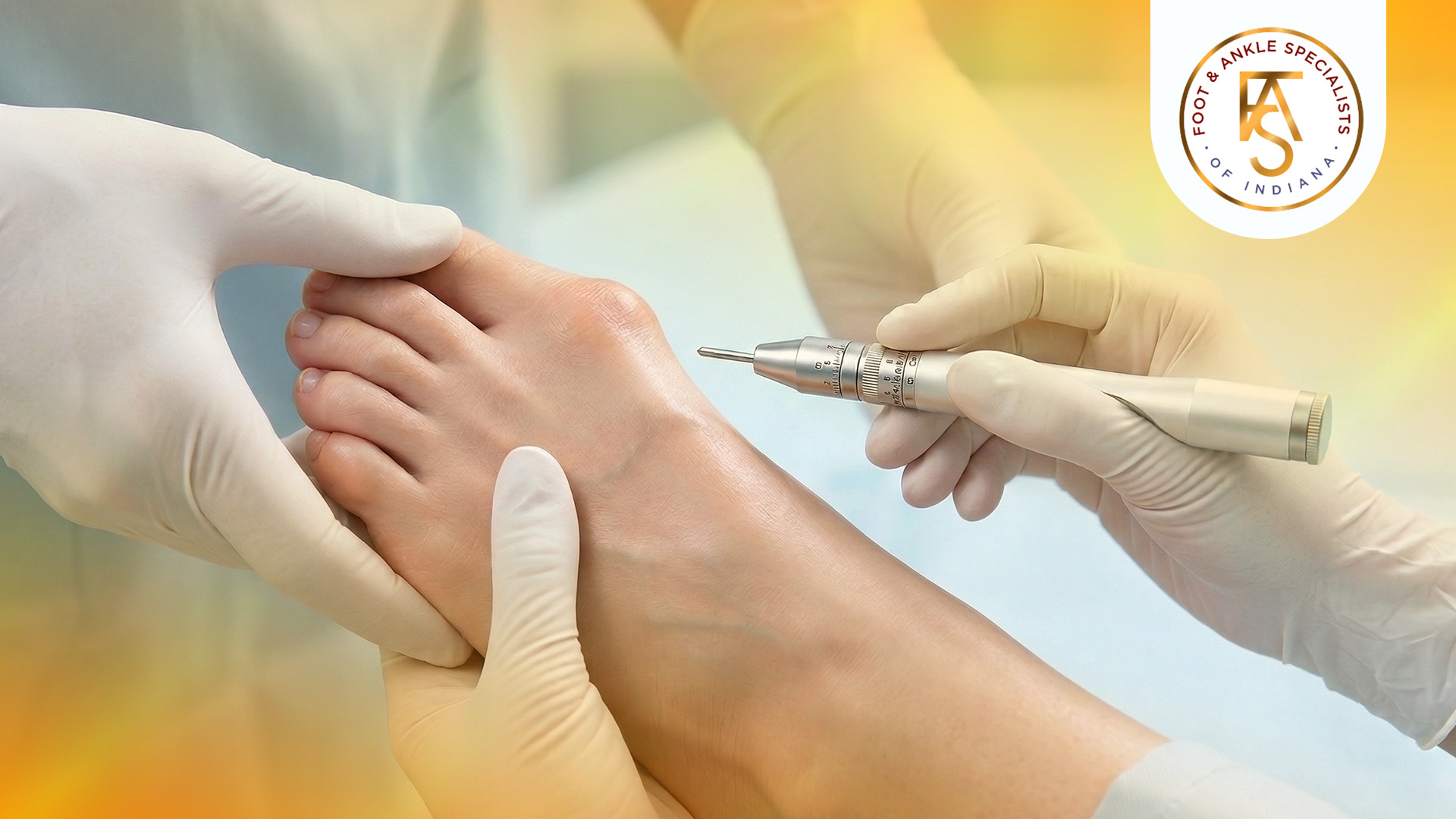
A bunion, or hallux valgus, is a bony protrusion that forms at the base of your big toe. It occurs when the first metatarsal, the bone in the foot that connects to the big toe, shifts towards the midline of the body. This movement causes the metatarsal head to protrude, creating the characteristic bump at the joint.
As the big toe moves toward the smaller toes to stay aligned with the cartilage of the metatarsal head, it can lead to joint instability, causing arthritis or pain. This condition can also create discomfort due to friction as the prominent metatarsal head rubs against shoes or other surfaces.
Over time, this misalignment can worsen, causing the characteristic bump to become larger and more painful.
Bunions don’t just affect the appearance of your feet. They can cause:
- Persistent pain and soreness around the big toe joint
- Inflammation and redness
- Restricted movement of the big toe
- Corns and calluses where toes rub together
- Difficulty finding comfortable shoes
- Changes in your walking pattern to avoid pain
- Pain that radiates throughout the foot
While some people can manage mild bunions with wider shoes, padding, and orthotics, these conservative measures don’t correct the underlying deformity. As bunions progress, they often become more painful and harder to treat without surgery.
When to consider bunionectomy surgery
Most doctors recommend trying conservative treatments first, but surgery may become necessary when:
- Pain persists despite wearing appropriate footwear and using orthotics
- The bunion interferes with daily activities
- Chronic inflammation and swelling won’t respond to treatment
- The deformity is progressively worsening
- You’re developing secondary foot problems due to an altered gait or
- The big toe drifts so far that it underrides the second toe
The good news is that bunionectomy is one of the most common and successful foot surgeries performed, with most patients experiencing significant pain relief and improved foot function.
What happens during bunionectomy surgery
Modern bunionectomy techniques have come a long way. Your surgeon will choose the specific procedure based on the severity of your bunion, your age, activity level, and overall health. The surgery typically involves:
- Removing the bony bump: The protruding portion of bone is removed from the big toe joint
- Realigning the bones: The bones of the big toe are repositioned to correct the angle
- Balancing soft tissues: Tendons and ligaments around the joint are adjusted to maintain proper alignment
- Securing the correction: Small screws, pins, or plates may be used to hold bones in their new position
Many bunionectomy procedures can now be performed with minimally invasive techniques, resulting in smaller incisions, less tissue damage, and faster recovery times.
Recovery and returning to normal activities
Recovery from bunionectomy typically follows this timeline:
First 2 weeks: You’ll need to keep weight off the operated foot, rest with your foot elevated, and keep the surgical site clean and dry. Pain is managed with prescribed medications.
Weeks 2-6: You’ll gradually transition to weight-bearing in a special surgical shoe or boot. Swelling will slowly decrease, though some swelling is normal for several months.
Months 2-6: Most patients can return to regular shoes around 6-10 weeks post-surgery. You’ll continue building strength and flexibility through exercises recommended by your surgeon.
Long-term: Full recovery typically takes 4-6 months, with continued improvement up to a year. Most patients report a dramatic reduction in pain and improved foot function.
Following post-operative instructions carefully is crucial for optimal healing and preventing complications. This includes keeping appointments, doing prescribed exercises, and being patient with the healing process.
Life after bunionectomy: what to expect
Most patients are thrilled with their bunionectomy results. Benefits include:
- Significant or complete elimination of bunion pain
- Improved foot appearance
- Ability to wear regular shoes comfortably
- Better balance and walking pattern
- Increased activity level without foot pain
- Prevention of further deformity
While bunions can recur if you have a strong genetic predisposition or continue wearing poorly fitting shoes, most patients enjoy long-lasting results when they follow their surgeon’s recommendations for proper footwear and foot care.
Take action against bunion pain
Don’t let bunion pain control your life another day. As April brings warmer weather and more opportunities for outdoor activities, imagine participating without the constant discomfort of bunion pain.
At FAS Indiana, we specialize in advanced bunionectomy techniques designed to provide excellent results with minimal downtime. Our experienced team will evaluate your specific condition and recommend the best treatment approach for your needs.
Inquire or book your consultation today to learn more about how bunionectomy surgery can help you finally overcome bunion pain and get back to living your life to the fullest.


